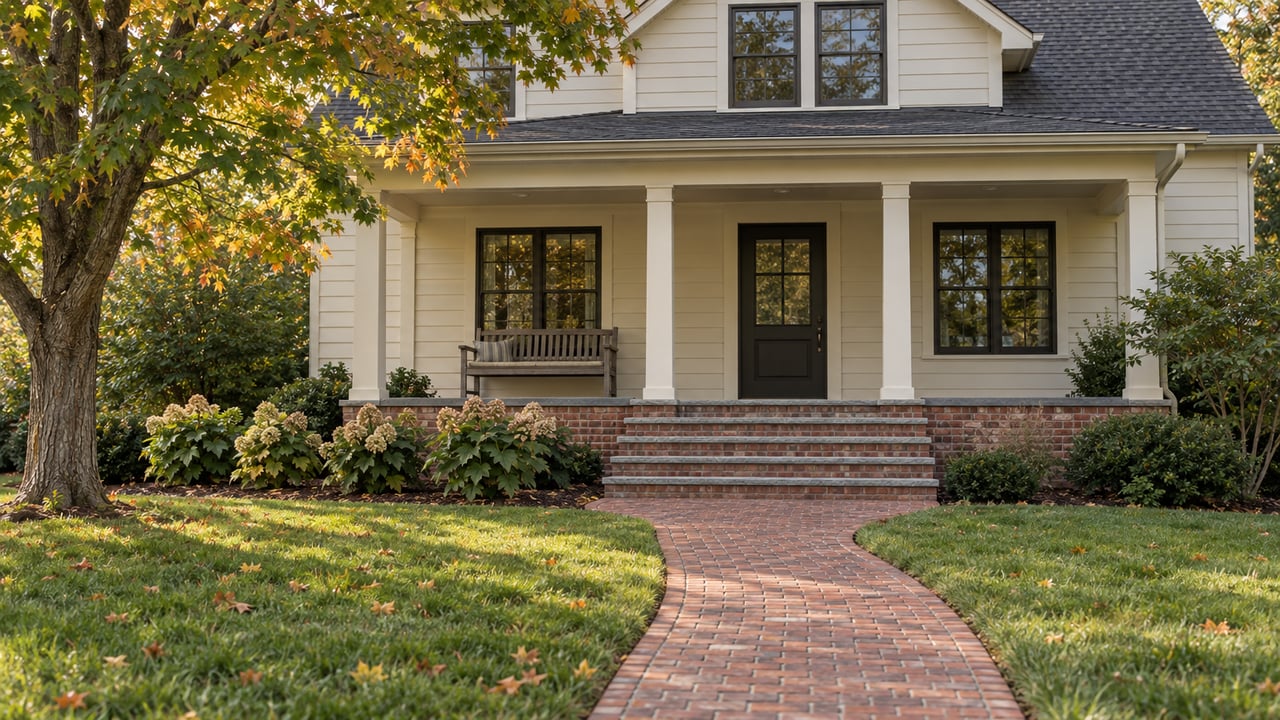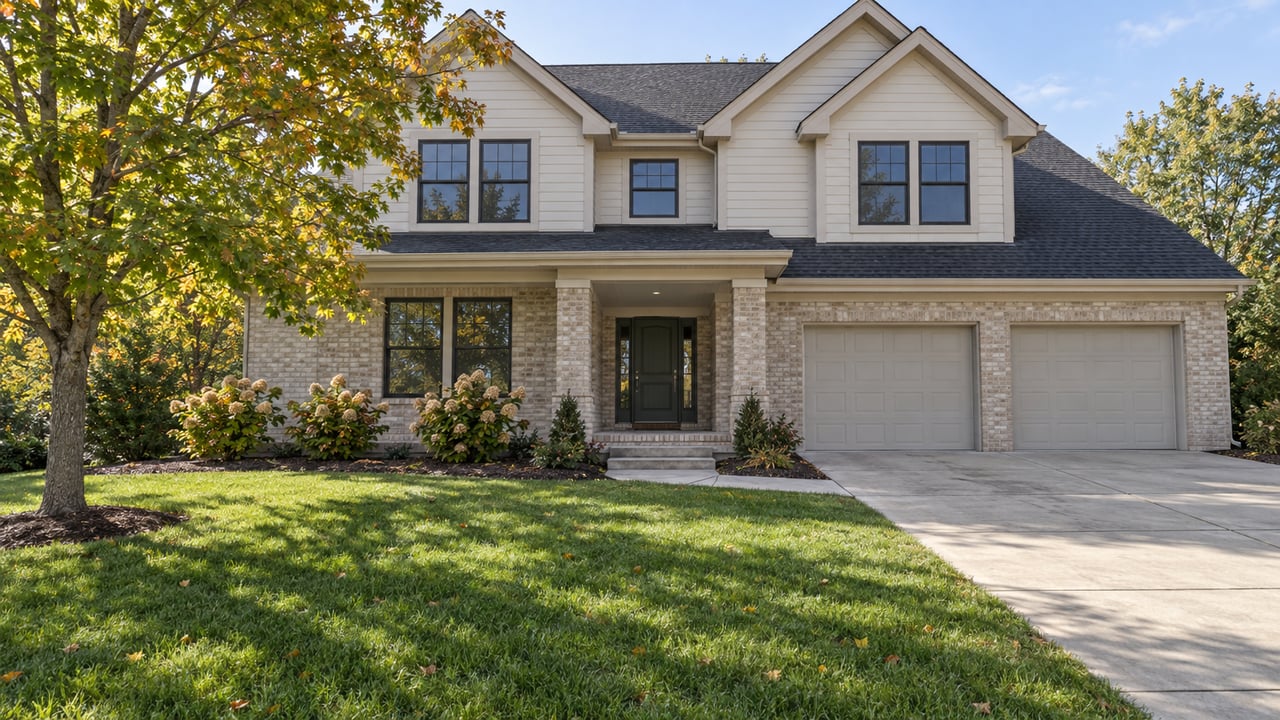
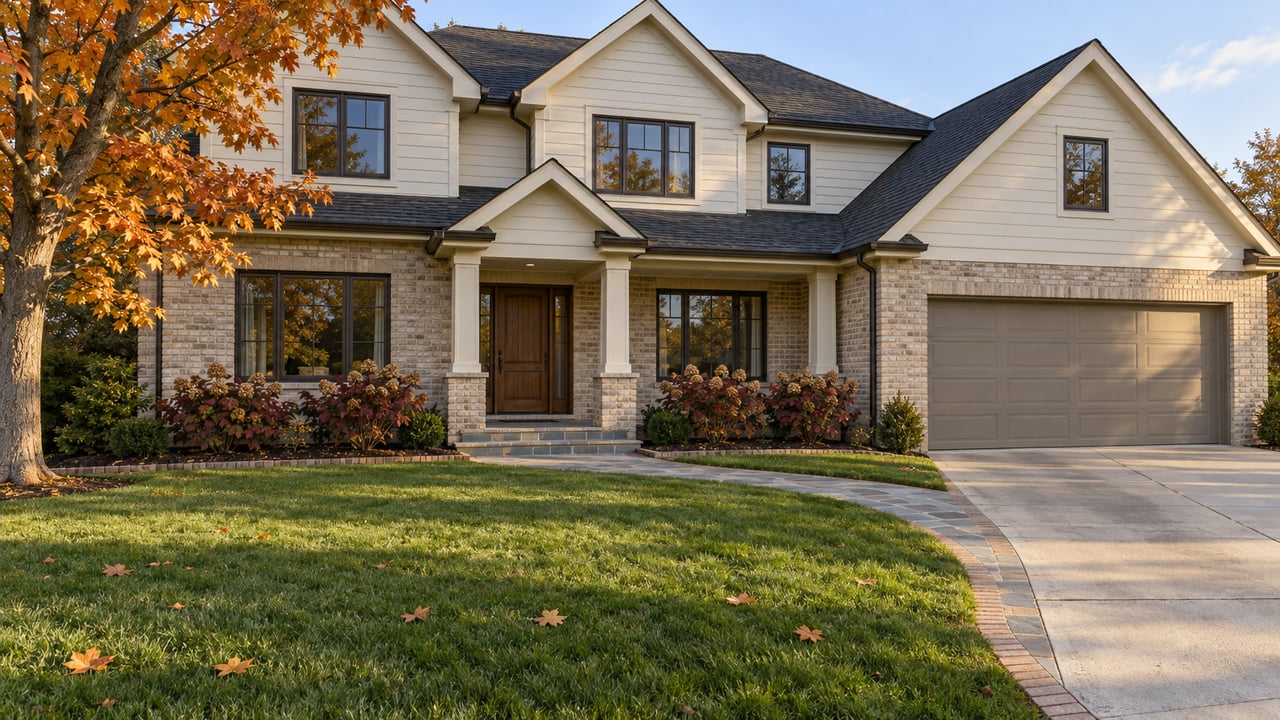
"Incentives subject to maximum interested party contribution limits based on loan program and down payment."
That line is from the fine print of Toll Brothers' current Tennessee offer, a 5.49% FHA 30-year fixed rate on select quick move-in homes. For anyone in Franklin weighing a new build against a resale home this fall, it matters. The buydowns, closing-cost credits and "flex cash" builders advertise fall under the same federal limits that apply to a homeowner selling a ten-year-old house in the same zip code. Builders have a better-packaged offer. They don't have a different set of rules.
The Rule Covers the Builder and the Seller Alike
Fannie Mae's Selling Guide defines an "interested party" in a home sale. The list includes the property seller, the builder or developer, the real estate agent and any affiliate of those parties. On a conventional loan, the money any of them can put toward the buyer's closing costs is capped by the buyer's loan-to-value ratio. The cap is figured on the lower of the sales price or the appraised value.
FHA uses one ceiling. HUD's FHA guidance says sellers, builders, developers, real estate agents and lenders may together contribute up to 6% of the sales price. That 6% includes payments for permanent and temporary interest rate buydowns.
Here is what those caps mean at Williamson County's Q3 2026 residential median of $1,075,000, which Greater Nashville REALTORS reported across 1,163 residential closings from July through September.
| Loan type and down payment | Contribution cap | At a $1,075,000 price |
|---|---|---|
| Conventional, less than 10% down | 3% | $32,250 |
| Conventional, 10% to just under 25% down | 6% | $64,500 |
| Conventional, 25% or more down | 9% | $96,750 |
| FHA, any down payment | 6% | $64,500 |
The conventional rows cover a primary residence or second home. Investment purchases are capped at 2% no matter the down payment. The table applies the same way to a builder and to a resale seller. A seller on an established street in Franklin can offer a buyer with 20% down the same 6% a national builder can.
What the In-House Lender Changes, and What It Doesn't
What visibly sets builder offers apart is the affiliated mortgage company. Toll Brothers runs its offers through Toll Brothers Mortgage Company. Drees runs its Nashville-area promotion through First Equity Mortgage.
The in-house lender doesn't lift the caps. Under Fannie Mae's guide, a lender doesn't count as an interested party unless it's the seller or is affiliated with the seller or another interested party. Fannie Mae defines affiliation as common ownership or control between the lender and the interested party. Toll's own fine print reflects the same limit.
The rules also cover money beyond the cap. Fannie Mae treats any contribution above the cap, or above the buyer's actual closing costs, as a sales concession and subtracts it from the sales price before calculating the loan-to-value ratio. HUD handles FHA loans the same way, with a dollar-for-dollar reduction. Once incentive money runs past the limit, lenders treat it as a lower price.
The affiliated lender gives the builder speed, a polished marketing message and a set of conditions. Those conditions are where buyers need to read carefully.
Two Franklin Offers, Read Line by Line
These are the offers that apply to Franklin addresses this fall.
Toll Brothers, Franklin Ridge. The community lists a sales center with a Franklin 37067 address. Its community page recently advertised "50% Toward Options Up to $30,000 + $15,000 in Closing Costs With Toll Brothers Mortgage Company." The event was extended through October 25, 2026, so its posted deadline has now passed. It still shows how these offers are split. One part of the money went to finishes and the other went to closing costs, and only the closing-cost part ran through the lender.
Toll Brothers, Tennessee FHA rate. The 5.49% fixed rate, 6.27% APR, comes with these terms:
- Select quick move-in homes only
- The buyer signs an agreement of sale on or after 10/8/26 and closes by 12/18/26
- A minimum 660 qualifying credit score and a completed rate lock with Toll Brothers Mortgage
- It can't be combined with any other offer
- FHA county loan limits apply
The sample payment in Toll's terms assumes a $509,224 sales price. That's less than half of Williamson County's Q3 2026 residential median, which says a lot about how few Franklin price points this offer is built for.
Drees Homes, Nashville-area promotion. Drees offers up to $30,000 toward closing costs or a lower monthly payment on select quick move-in homes, or toward structural options and design upgrades on build-to-order homes. The terms:
- The buyer uses First Equity Mortgage
- A firm, non-contingent contract accepted October 1 through November 22, 2026
- Closing by December 22, 2026
- Elevate by Drees, Bear Creek Overlook, Ashton Park and Townes at Whistle Stop are excluded
Drees lists Starnes Creek and Starnes Creek Estates as Franklin communities with quick move-in homes. Before you count on the promotion for a particular home there, get written confirmation that the home qualifies.
The phrase "non-contingent" in the Drees terms deserves a careful look. A buyer with a Franklin home still to sell would have to give up a sale contingency to get the money.
Why the Payment Is the Number Everyone Is Watching
These offers are built around the monthly payment for a reason. Freddie Mac's weekly survey put the average 30-year fixed rate at 6.16% on January 8, 2026. By October 22 it was 7.32%.
Toll's terms give a payment factor of $5.67 per $1,000 financed at 5.49%. On the $500,000 sample loan in those terms, that works out to roughly $2,835 a month in principal and interest. At 7.32%, the same $500,000 comes to roughly $3,435 a month in principal and interest, by standard amortization math. That gap of about $600 a month is what the incentive is buying. Keep in mind the 7.32% is Freddie Mac's survey average across loans, not a quote for any one buyer, so treat the comparison as an order of magnitude.
Greater Nashville REALTORS' October 4 look at the regional new-construction market describes how each side competes. Builders may offer closing-cost assistance, price cuts or rate buydowns. Sellers of existing homes may negotiate on price or contribute to closing costs. Both sides have the same tools. Resale listings rarely present those tools as a payment.
What a Resale Seller Can Put on the Table
If you're selling in Franklin this fall, the same caps that limit the builder down the road also set how far you can go. A seller can pay toward a buyer's closing costs and discount points within those limits, and HUD's guidance names permanent and temporary buydowns among the eligible uses on FHA loans.
A resale seller also has one practical advantage. No preferred-lender requirement comes attached. A buyer can keep the lender they were already working with and still use the seller's contribution, as long as it stays inside the cap and doesn't exceed the buyer's actual closing costs.
For buyers comparing a new build with a resale this season, these questions put the two homes on even terms:
- What will my monthly payment be on each home, using the same down payment and loan type?
- Which part of the builder's incentive goes to closing costs or the rate, and which part goes to options I would not otherwise buy?
- Does the incentive require a specific lender, a firm contract without contingencies or a closing deadline?
- Would the resale seller put a similar amount toward closing costs or a buydown, within the same cap?
- Will the home appraise at the contract price once any money above the cap is subtracted?
This is general information, not legal, tax or financial advice. Your own loan program, down payment and contribution limits should be confirmed with your lender.
A Few Common Questions
Can a builder's in-house lender give me more than the cap allows? Under Fannie Mae's guide, a lender affiliated with the seller or builder counts as an interested party, so its contributions fall under the same cap.
Does a temporary buydown count toward the FHA 6% limit? HUD's guidance lists both permanent and temporary interest rate buydowns inside the 6%.
Is the Franklin Ridge closing-cost event still running? The event's posted deadline was October 25, 2026. Toll's separate FHA rate offer runs on contracts signed on or after 10/8/26 for homes that close by 12/18/26.
If you're selling in Franklin and want to know what a closing-cost or buydown offer could do for your listing next to the new construction nearby, Mary Brown can price both approaches for your home. Request Your Home Valuation, and we'll show you where your contribution limit falls and what it can buy a buyer.