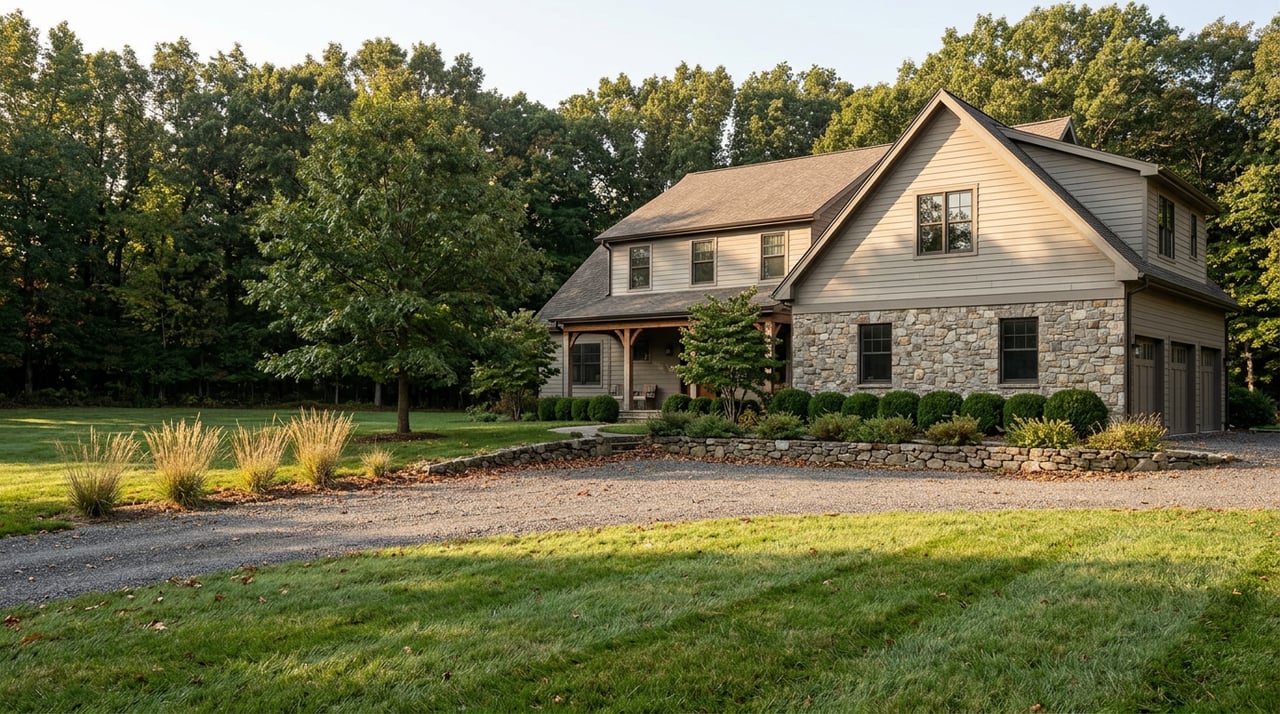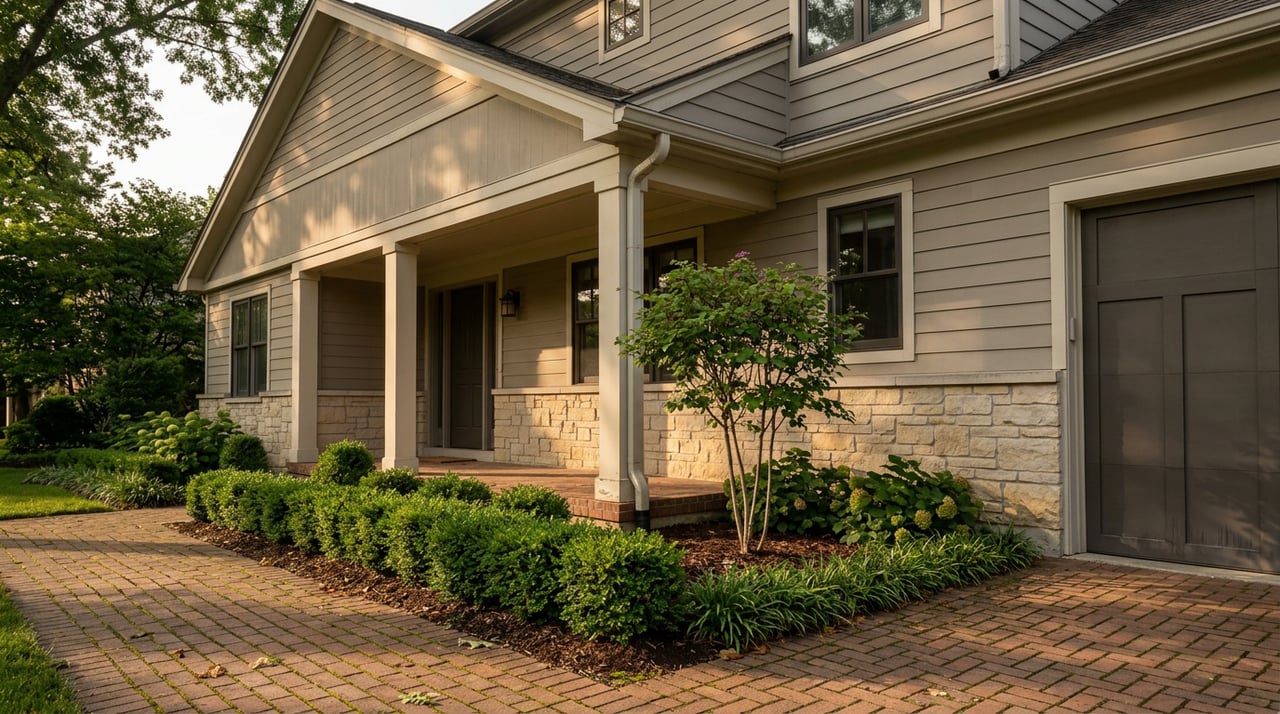
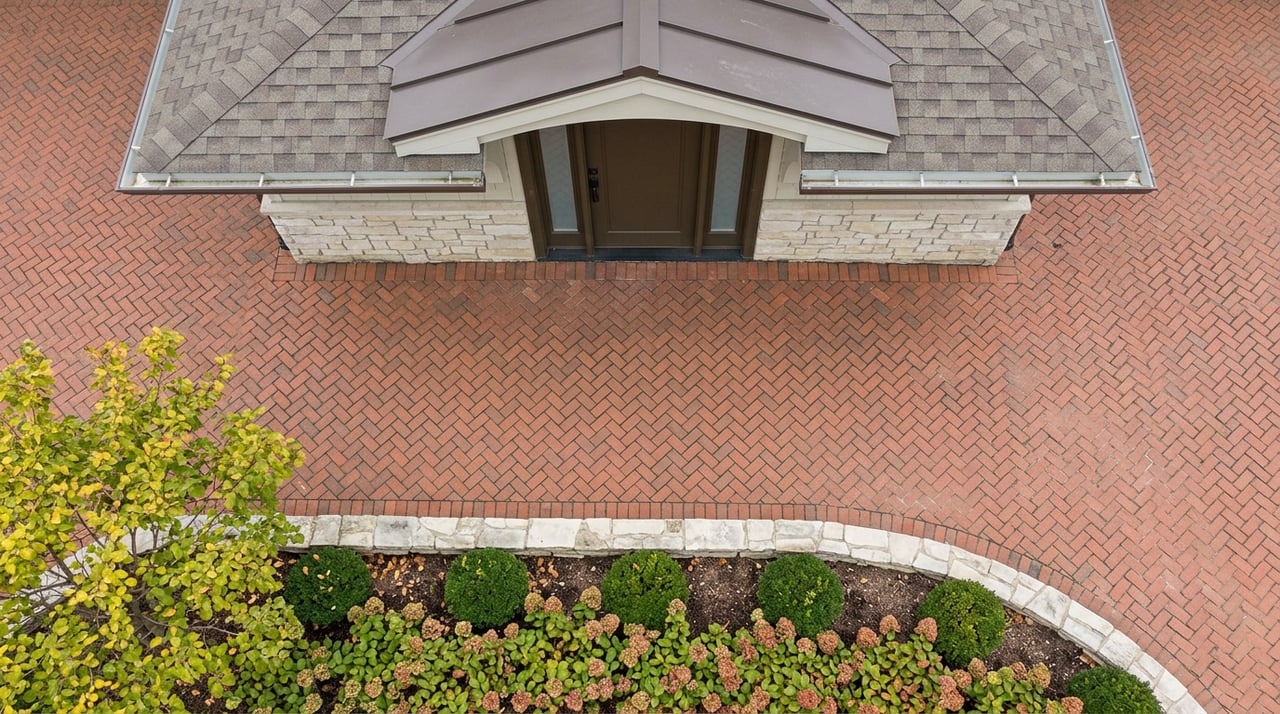
Two listings can carry the same 37027 zip code, sit a few minutes apart by car, and still belong to entirely different housing markets. One is a new-construction estate inside a gated community with a $3 million-plus price tag. The other is an older home on an acre-plus lot, priced closer to $400,000, in a part of town most portal searches lump into the same "Brentwood" bucket.
Buyers who've already scanned the median price for Brentwood, somewhere in the $1.3 million to $1.6 million range depending on the source and the month, tend to assume that number describes one market with some scatter around it. It doesn't. Brentwood prices as two markets stitched together under one city limit, and the seam between them isn't a school zone, an HOA gate, or even a highway. It's a sewer line.
The Line the City Draws for You
The City of Brentwood is upfront about this on its own utilities page: the sewer service district does not cover every address inside city limits. With a few exceptions, the city does not run sewer service to most areas east of Edmondson Pike and Sunset Road. East of Sunset Road, Metro Water Services picks up sewer duty instead. East of Edmondson Pike, water service comes from the Nolensville/College Grove Utility District rather than the city. Parcels that fall outside all three of those footprints run on septic, permitted and regulated by the Tennessee Department of Environment and Conservation through Williamson County Environmental Health.
That's a plumbing detail on paper. In practice, it's a fault line that has shaped where builders put new subdivisions, how old the pipes are under existing homes, and why the price-per-square-foot gap between the two sides of that line has settled in near two to one.
What Sits Where
Rosebrooke, one of the most active new-construction communities in the city, sits at the intersection of Sunset and Split Log roads, essentially astride the line the city draws on its own sewer map. Its 248 homesites were built on 365 acres with modern utility infrastructure laid down as part of the development itself. Over the trailing 12 months, 53 sales closed there with a weighted median around $3.9 million and a range from roughly $2.5 million to $7.6 million.
A few miles over, Governors Club, Brentwood's gated golf community anchored by an Arnold Palmer-designed course, posted 85 closed sales over the same period at a median near $2.9 million. Hampton Reserve, built out between 2003 and 2019 off Concord Road, saw 36 sales at a median of $2,475,000. McGavock Farms, an established luxury pocket, closed 19 sales at a $2.15 million median.
Those four names anchor the top of Brentwood's market, and all four sit comfortably inside the city's sewer footprint. Compare that to what a local trenchless-repair contractor sees on service calls across town: a housing stock mixed between custom builds from the 1970s through the 1990s in the older estate neighborhoods, running on original cast-iron or clay laterals that are reaching the end of their service life, and newer construction concentrated toward Nolensville Road. The failure patterns they diagnose most often on those older lines are root intrusion at pipe joints and bellied runs under the long driveways typical of Brentwood's acre-plus parcels. Those are the homes, many of them outside the sewer district or on legacy septic in the city's outer residential zones, that make up the low end of the range.
Over the trailing six months ending in mid-August 2026, 461 homes closed in Brentwood at a median of $1.32 million and $346 per square foot, but the individual sales ran from $373,000 on the established end to $4.32 million on new construction. That's not noise around a median. That's two separate distributions, and the line that splits them tracks the same boundary the city publishes for water and sewer service.
| Subdivision or segment | Trailing 12-month median | Utility context |
|---|---|---|
| Rosebrooke | ~$3.9M (53 sales) | New construction, sits at Sunset & Split Log Roads, built on city infrastructure |
| Governors Club | ~$2.9M (85 sales) | Gated golf community, inside city sewer footprint |
| Hampton Reserve | ~$2.48M (36 sales) | Gated estate, built 2003–2019, inside city sewer footprint |
| McGavock Farms | ~$2.15M (19 sales) | Established luxury, inside city sewer footprint |
| Citywide established resales | As low as $373K (part of 461 six-month closings) | Older housing stock, concentrated outside the sewer district or on legacy septic |
Why the Two-to-One Gap Isn't Just About Finishes
It's tempting to explain the price-per-square-foot gap between new construction and established stock as a story about granite countertops and ten-foot ceilings. Finishes matter, but they don't explain a gap that a market watcher following Brentwood closely has flagged as worth monitoring precisely because it has held near two to one for a stretch of months. Finish quality shifts gradually. A utility boundary doesn't shift at all.
What the gap actually captures is replacement infrastructure versus inherited infrastructure. A buyer paying $3.9 million in Rosebrooke is paying for a house on a lot where the sewer connection was engineered in the last few years for the development. A buyer looking at a $400,000 resale on the other side of Edmondson Pike is looking at a lot where the wastewater system might be a septic tank that's been in the ground since the Carter administration, or a lateral line that predates the subdivision's own paved streets. Both houses are "in Brentwood." Only one of them comes with modern plumbing baked into the purchase price.
This matters for anyone using Brentwood's median as a stand-in for what the city actually costs. The median blends both distributions into a single number that doesn't describe either one particularly well.
What This Means Standing in the Driveway
If you're touring homes on the established side of that line, the inspection period is where this stops being an abstraction and starts being a line item. Tennessee doesn't require home inspections by law, but they're standard practice across Williamson County, with buyers typically paying for their own inspector, usually in the $400 to $700 range for a standard home. For anything built before the current sewer buildout, or anything you suspect might be on septic, a sewer camera scope or a separate septic inspection is worth adding. A standalone septic check typically runs a few hundred dollars, and if the inspection turns up a failing drainfield or an aging pump, full repairs in Williamson County can run anywhere from $5,000 to $30,000 depending on scope.
Tennessee's property disclosure law requires sellers to report known material defects, including septic tank failures, but only what they actually know. A seller isn't obligated to hire an inspector before listing, and the disclosure form is not a warranty. That puts more weight on the buyer's own due diligence during the standard 7 to 14 day inspection window most Tennessee contracts include. If the report comes back with real findings, the norm in Middle Tennessee right now leans toward closing credits rather than asking a seller to coordinate the repair themselves, typically in the range of 1 to 3 percent of the purchase price.
None of this means a septic system or an older lateral line is a reason to walk away. Plenty of well-maintained Brentwood homes on legacy systems have been reliable for decades. It means the question "is this house on city sewer or something else" deserves to be asked before you fall for a listing photo, not after the inspection report lands in your inbox.
A Few Questions Worth Asking Early
How do I find out if a specific address is inside the sewer district? The city publishes a service area map through its Water Services department. For any address near Edmondson Pike, Sunset Road, or the eastern edge of town, it's worth checking before you write an offer.
Does being on septic cap what I can build or add later? It can. Septic permits are tied to a specific number of bedrooms and a drainfield sized for that load, so an addition that adds bedrooms may require a new permit and possibly a larger system. That's a conversation for Williamson County Environmental Health before you finalize renovation plans.
Is new construction automatically on city sewer? Not automatically, but most of the active new-construction communities, including the ones driving Brentwood's top end, were built within the sewer footprint or with their own engineered systems as part of the development. It's still worth confirming for any smaller infill project outside the major subdivisions.
Brentwood's median price will keep getting quoted as a single number because that's what portals report. The more useful number is the one underneath it: which side of the utility line a specific address sits on, and what that means for the offer you're about to write. If you're weighing a move into Brentwood, or trying to figure out whether a listing's price makes sense once you know what's actually running underneath the lawn, Mary Brown has spent decades reading Williamson County listings this closely. Request a home valuation and get a straight answer about what a specific address actually costs to own, not just to buy.