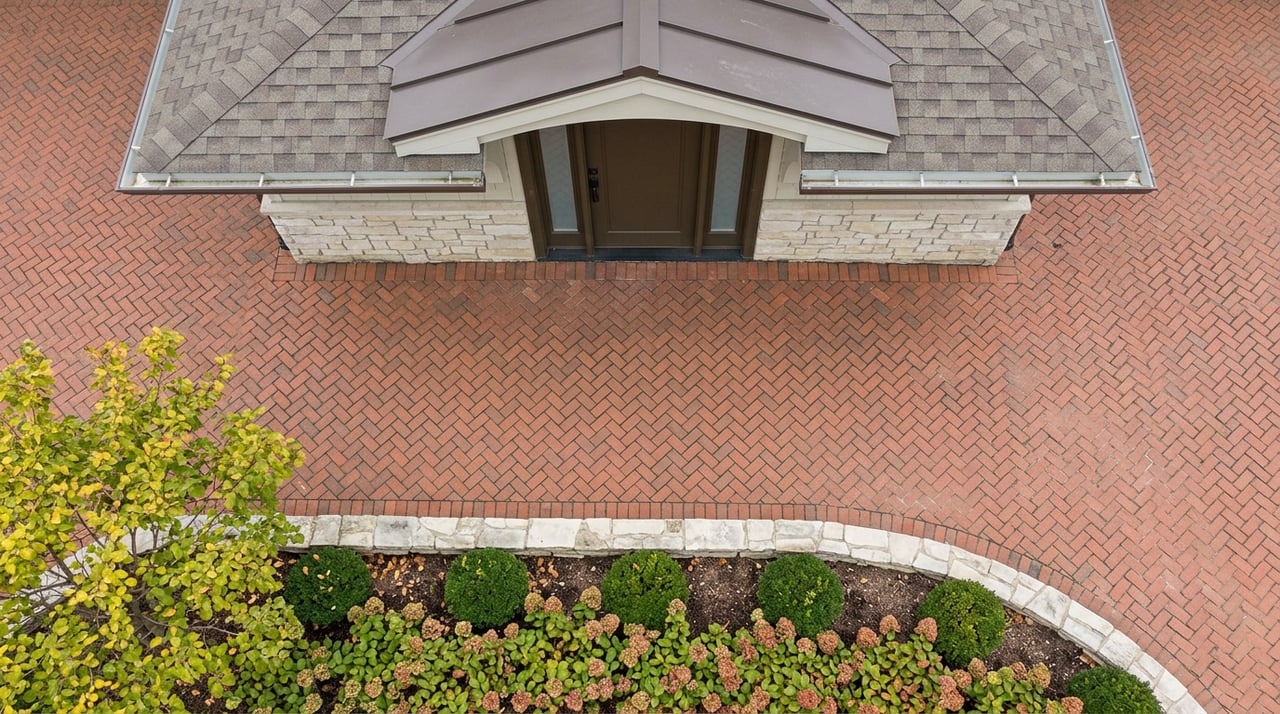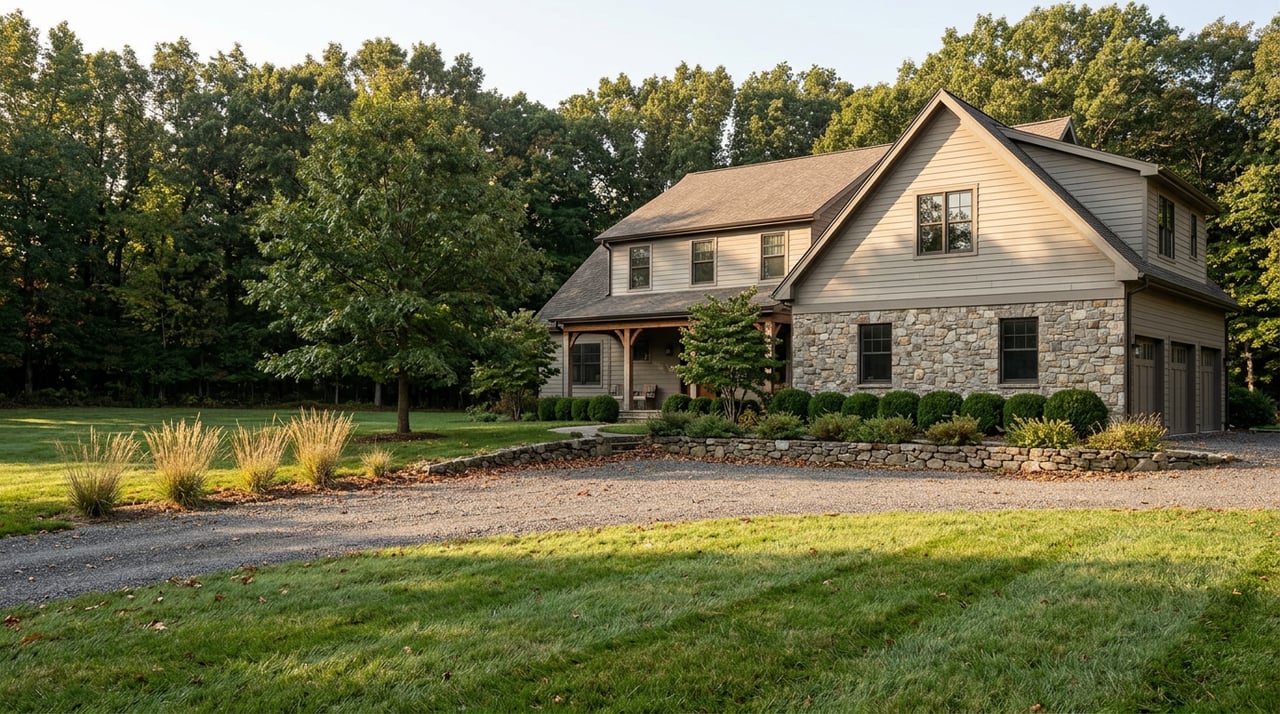
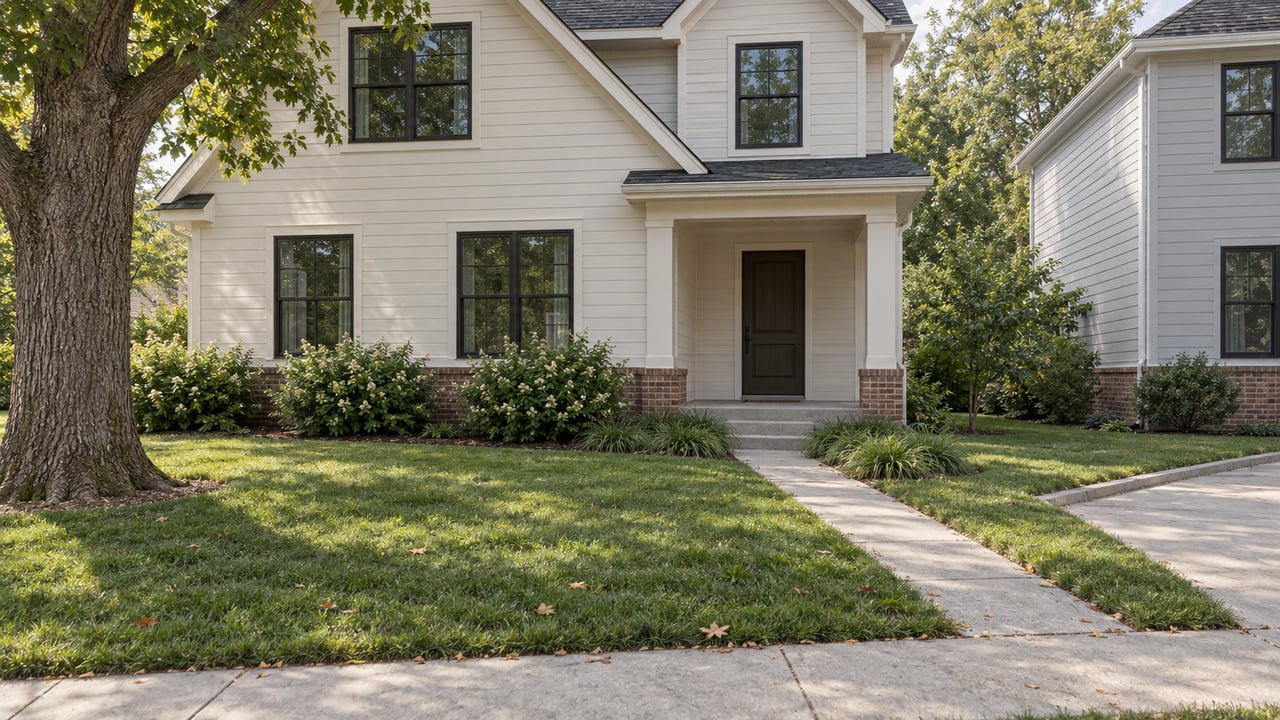
Walk a recent sale list for Green Hills and something doesn't add up if you're pricing by the square foot. Two houses a block apart, similar age, similar finish, can carry wildly different loan requirements even though the listing photos look almost identical. The difference usually isn't the house. It's what's recorded at the Register of Deeds.
Over the rolling 12 months ending in June 2026, 393 homes closed in Green Hills at a median price of $1,385,000 and a median of $425 per square foot. Of that inventory, 71 percent were traditional site-built homes on their own parcel. The other 29 percent were something else entirely: horizontal property regime homes, known locally as HPR, where two detached houses sit on what is still legally a single lot.
That distinction matters more than the price tag does, because it changes how a lender looks at the property before it ever gets to appraisal.
Why One Lot Became Two
Green Hills has been fully built out since the 1960s. There is no raw land left to subdivide into new streets of single-family lots, which is part of why the neighborhood has been one of the most active tear-down and rebuild markets in Davidson County over the past five years, as of August 2026. When a builder buys an aging ranch on a lot big enough for two footprints, there are two ways to add supply: formally subdivide the parcel through Metro's platting process, or use Tennessee's horizontal property regime statute to place two individually deeded homes on the same lot without subdividing it at all.
The second path is faster. A 2024 study from the Mercatus Center found that Tennessee's HPR law lets builders repurpose small urban lots into detached, owner-occupied homes while using conventional mortgage financing, without the cost and delay of a formal subdivision process. That's the mechanism behind the teardown-rebuild pace in Green Hills. It's also why a buyer touring two new construction homes side by side, one on its own subdivided lot and one paired as an HPR, will find nearly identical curb appeal attached to two different legal structures.
Not every Nashville neighborhood has let this proceed unchecked. Some nearby high-dollar pockets, including parts of Belle Meade, have pursued downzoning specifically to slow new HPR development. Green Hills has not taken that route, and the volume of recent teardown activity here reflects it.
What You Actually Own in an HPR
An HPR splits one parcel into individually owned units, typically two, each with its own deed, while the land underneath remains co-owned. Detached HPRs require at least six feet of green space between the two structures. Each owner gets exclusive rights to their unit and often a limited common area like a driveway or backyard, but the surrounding lot itself is shared property governed by a recorded declaration.
That declaration usually establishes a homeowners association, and Tennessee requires a $100 annual filing with the Secretary of State to keep that association legally active. Letting the filing lapse generally causes little trouble for a fully detached HPR with no shared building elements. It matters more for attached HPRs, where a lapsed association can complicate insurance on a shared wall or roof.
None of this shows up in a standard listing photo. It shows up in the recorded plat and the master deed, which is why the property type, not just the price, is the first thing worth confirming before a buyer gets attached to a specific address.
The Question a Traditional Comp Can't Answer
| Traditional site-built | Detached HPR | |
|---|---|---|
| What's on the deed | Individual lot and structure | Individual unit plus an undivided interest in shared land |
| Governing document | Standard deed | Recorded declaration and, often, an HOA |
| Typical lender review | Standard single-family underwriting | Often reviewed like a condo project: declaration, HOA budget, insurance, reserves |
| VA loan treatment | Standard VA appraisal | May require VA condo project approval depending on the declaration |
| Appraisal comps | Compared to nearby site-built sales | Should be compared to other HPR sales, not blended with site-built |
A lender evaluating an HPR purchase will typically ask for the recorded declaration, the HOA's operating budget, current insurance, and confirmation there's no pending litigation or unresolved special assessment, the same documents a condo purchase requires. A buyer who assumes this is a routine single-family closing because the house looks detached can lose real time in underwriting once the loan officer identifies the legal structure and has to pull additional project documentation.
What the Median Price Doesn't Tell You
The $425 median price per square foot for Green Hills over the past 12 months blends two very different products. New construction on teardown-rebuild infill lots has been closing north of $700 per square foot in that same window. The highest recorded sale in the neighborhood in May 2026, at 1617 Graybar Lane, was a 7,281-square-foot home built in 2018 that closed at $5,253,000, or $721 per square foot, after five days on market. Two more of the neighborhood's top five sales that same month were newer builds priced similarly per foot.
That gap is part of why the neighborhood's per-square-foot figures have been climbing fast. Market tracking as of July 2026 put Green Hills' median sale price per square foot at $446, up 23.7 percent year over year. Some of that increase reflects genuine appreciation across the existing housing stock. Some of it reflects a compositional shift: as more of the neighborhood's annual sales come from expensive new construction rather than 1960s ranches, the median per-square-foot figure rises even if any individual owner's 1965 brick home hasn't appreciated at anywhere near that rate.
Pockets within Green Hills show how uneven this is. In the Tyne Meade area off Tyne Boulevard, which has recorded 10 closed sales over the past 36 months and a concentration of the neighborhood's largest recent builds, 2700 Hemingway Drive closed at $6.1 million in 2026 and 2408 Hemingway Drive closed at $5.03 million the year before. A few streets over in the older Woodmont Estates or Abbottsford pockets, sales have run through the same 10-closing count over the same period at prices reflecting mid-century renovation stock rather than ground-up new builds. Same neighborhood, same rolling three-year window, two different markets.
Green Hills itself is also unincorporated Davidson County, distinct from neighboring Forest Hills, which is its own incorporated city of roughly 4,800 residents with its own government and police department. Forest Hills typically trades 25 to 40 percent higher per square foot at the estate tier as of data current through August 2026, even though both share the 37215 zip code. A buyer cross-shopping the two should expect the higher Forest Hills number to reflect estate-scale lots and a separate municipal identity, not a straightforward quality difference.
What's Worth Confirming Before You Write an Offer
- Ask whether the specific address is a traditional single-family parcel or part of a horizontal property regime, and get the recorded declaration if it's the latter
- If it's an HPR, confirm the HOA's annual state filing is current and ask for the most recent insurance and reserve information
- If financing with a VA loan, confirm early whether the property needs VA condo project approval, since the listing description alone won't settle that
- For new construction over 5,000 square feet, ask whether all required signoffs, which can include Water and Sewer, Stormwater, Planning, or Historic review depending on the parcel, have cleared before assuming a fast closing timeline
- Ask your agent to pull comps filtered by property type, not just by price and square footage, since blending HPR and site-built sales in the same comp set will distort the number
A Few Common Questions
Is an HPR the same as a condominium? No. An HPR owner holds a deed to their specific unit plus an undivided interest in the shared land, governed by a recorded declaration rather than a condo regime. Lenders often review the paperwork similarly, but the ownership structure itself is legally distinct.
Does every new home in Green Hills use this structure? No. The majority, 71 percent of recent closings, remain traditional site-built homes on their own lot. HPR shows up specifically where a builder has taken one older lot and split it into two detached homes without formally subdividing.
Does the HPR structure affect resale value? It can. Resale value on a detached HPR unit can be influenced by the condition and upkeep of the paired unit next door, since both sit on shared land governed by the same declaration.
If you're comparing a Green Hills address against something in Forest Hills, Belle Meade, or another Nashville pocket and want a straight read on whether a specific listing is a standard parcel or a horizontal property regime before you get attached to the number on the sign, Mary Brown can help you pull the recorded documents and figure out what you're actually being asked to finance.