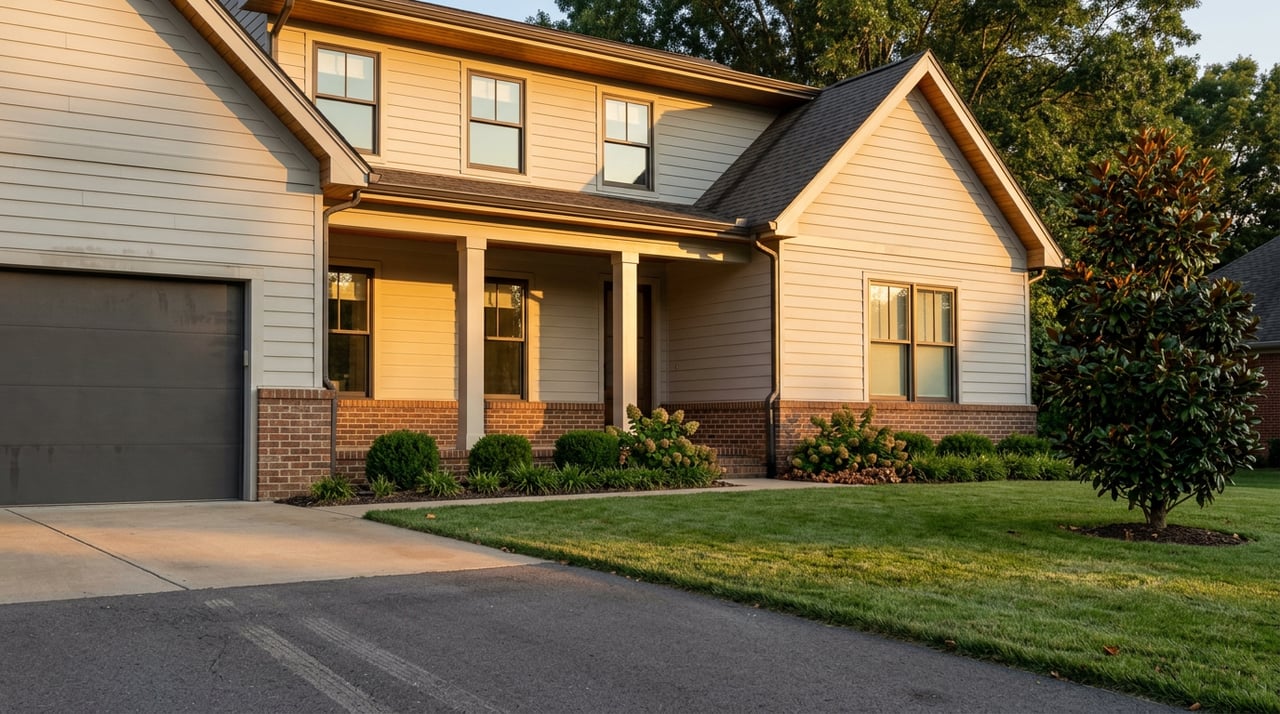
Drive into Arrington expecting a downtown and you will drive right through it. There is no strip of storefronts, no crosswalk anchored by a coffee shop and a hardware store, no single block where everyone ends up on a Saturday morning. What Arrington has instead is acreage: rolling pasture, a scattering of farms, and three privately owned properties that have become places for residents to gather, though not all on a recurring schedule.
That is the part of Arrington's weekend that a quick search will not tell you. The calendar here is full, sometimes fuller than towns with an actual Main Street, but it is not run by a parks department or a downtown association. Recurring public offerings come from a vineyard and a flower farm; a wedding barn opened its gates for a public event in July.
The Vineyard That Runs On A Wine-Only Rule
Arrington Vineyards sits on 95 acres, but only 16 of those acres are actually planted in vines. The other 79 are lawn, picnic space, and five tasting rooms scattered across the property, founded in 2005 by country artist Kix Brooks, businessman Fred Mindermann, and winemaker Kip Summers after Mindermann and Summers had already been growing grapes together at a vineyard in Brentwood. That ratio, more open ground than grapevine, is the reason the place reads more like a public park with a wine list than a working winery you tour and leave.
The schedule backs that up. Live jazz and bluegrass run every Saturday from roughly 3 to 7 p.m. and every Sunday from 2 to 6 p.m., split across two stages billed as Jazz on the Hillside and Bluegrass at the Barn. Food Truck Fridays run from 4:30 to 8:30 p.m. from May through October, with live music starting at 5:30. Midweek, there is Wine Wednesday Trivia on the Hillside and a Thursday evening songwriter series. None of it requires a ticket or a reservation. You show up, you sit on the lawn, and the only thing you are required to buy is a glass of their own wine, since outside alcohol is not permitted on the property.
That setup is worth noting: the lawn and music are free, and visitors can bring a blanket and a lawn chair. The vineyard feels less like a tourist stop and more like the town green Arrington never built.
The Flower Field That Is Closing Its Season
A few miles away on Beulah Church Road, Young Harvest Farm is doing something similar with a much smaller footprint and a much shorter history. Chelsea and Greg Young started the farm as a family vegetable garden in 2020. By November 2021 it had grown into an 18-acre operation built around workshops, education, and, most visibly to residents, u-pick flower fields.
Through the end of August, the farm opens its flower rows Friday through Sunday mornings for u-pick bouquets, priced around $25 with jars and scissors provided. That window matters right now because it is closing. Late August is the tail end of the season most years for farms like this one, which means the next few weekends are close to the last chance to walk the rows before the fields turn over for fall. If you have been meaning to go all summer, this is the point where meaning to go stops working.
The farm also runs a rotating slate of workshops, sourdough baking, fermentation, beginner gardening, that turn a working farm into something closer to a community classroom. None of it existed five years ago. All of it now shows up on residents' weekend calendars the same way a farmers market would in a town with an actual town center.
The Barn's July Public Event
The third property is the least public of the three, and that is exactly what makes it worth including. The Barn at Sycamore Farms sits on 28 acres along Murfreesboro Road, established in 2016 as a wedding and corporate event venue, complete with a lake, a stone bridge to a ceremony island, and enough capacity for 400 guests. Most weekends, it is booked for a private wedding or a corporate retreat, not a place residents wander into.
But in July, the barn opened its gates for the All-American Cookout, a Williamson County America 250 event with food, live music, and family activities, with proceeds benefiting the county's 4-H program. It was a one-night departure from the venue's usual private-event calendar, and it is a useful data point precisely because it is the exception. Private land doing public duty on its own schedule is the throughline connecting all three places, though only the vineyard and flower farm offer recurring public activities.
Stacking A Weekend Without Leaving Arrington
Put the three together and a resident's weekend starts to take a specific shape, one that does not require a drive into Franklin or Brentwood for anything beyond groceries:
- Friday evening: Food Truck Friday at Arrington Vineyards, food trucks on the lawn from 4:30 to 8:30 p.m. and live music starting at 5:30, no ticket required.
- Saturday morning: U-pick flowers at Young Harvest Farm, while the late-August window is still open.
- Saturday afternoon: Jazz on the Hillside and Bluegrass at the Barn back at the vineyard, two stages running at once.
- Sunday afternoon: More live music at the vineyard.
That is a full three-day loop built around recurring public offerings at the vineyard and flower farm. It is not an accident of good planning by a parks department. It is private businesses opening their gates on their own schedules.
Why This Matters Beyond The Weekend
None of this is really about wine or flowers. It is about what Arrington's lack of a traditional downtown actually means in practice. In towns built around a Main Street, the public gathering spaces are baked into the zoning, sidewalks, storefronts, a square. Arrington was never built that way, and it likely never will be, given the acreage and the agricultural character that define most of the land here. What filled that gap instead was private hospitality: a vineyard that treats its lawn like a park, a farm that treats its flower rows like a classroom, and a wedding venue that opened its gates for a public event in July.
For anyone who already calls Arrington home, that is worth knowing because it changes how you plan a weekend, and worth knowing because it explains something about the character of the place itself. Arrington's social life includes recurring public offerings at the vineyard and flower farm, along with the wedding barn's July public event.
If you are curious how that character shows up in the value of a specific property here, whether it is proximity to the vineyard, frontage near one of these working farms, or simply the quiet that comes from a place with no traffic light, Mary Brown has spent more than three decades reading Williamson County parcel by parcel, not zip code by zip code. Request your home valuation and find out what your corner of Arrington is actually worth in today's market.